
Astrology Between Science and the Humanities
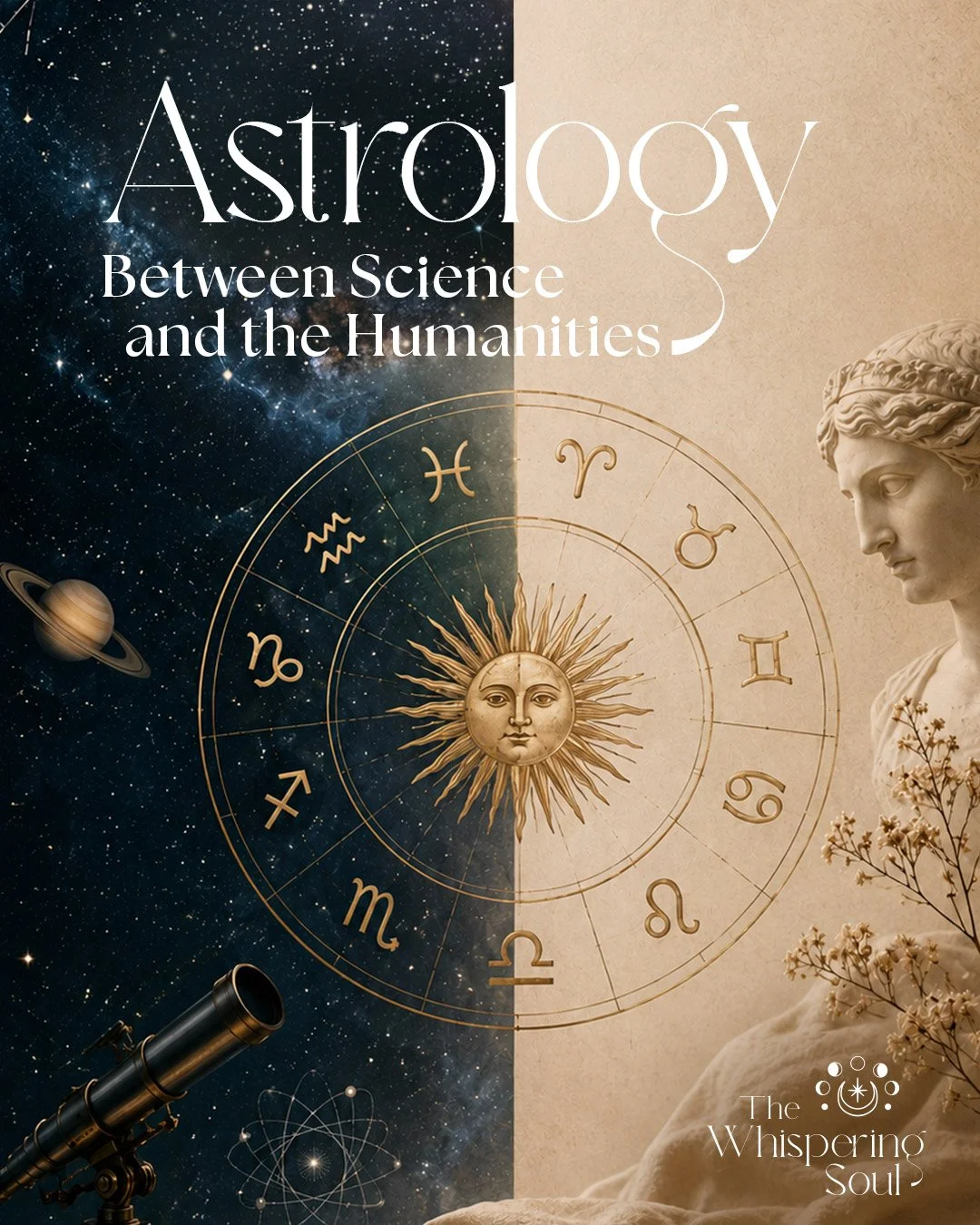
Astrology has long lived at the intersection of science and the humanities.
For centuries, people have tried to separate logic from intuition, reason from imagination, and measurable facts from personal meaning. Yet human life has never truly functioned in fragments.
In earlier civilizations, the study of the stars was not divided into strict categories of science, spirituality, and philosophy. Observing the heavens was connected to agriculture, navigation, ritual, storytelling, and humanity’s search for meaning.
When we bring together our “left-brain” and “right-brain” ways of thinking, we begin to see the wholeness of human understanding. Science helps us explore how the universe works through observation, evidence, and discovery. The humanities help us explore what it means to be human through story, symbolism, philosophy, spirituality, psychology, and art.
Astrology lives within this meeting place.
For some, astrology is not about predicting fate with scientific certainty but about reflection, archetypes, patterns, and connection. It offers a symbolic language that many people use to understand themselves, relationships, seasons of life, and their place within the cosmos.
The humanities ask:
What gives life meaning?
Why do humans seek patterns and stories?
How do symbols shape identity and culture?
Science asks:
What can be measured?
What can be tested?
How does the universe function?
Both perspectives matter and, when integrated and valued, contribute to the wholeness of what it means to be human.
In today’s world, we often divide knowledge into separate categories: scientific or spiritual, rational or emotional, objective or intuitive. But communities thrive when we allow conversations between these ways of knowing rather than forcing them apart.
Astrology can be approached not only as a system of belief but also as a cultural, historical, and psychological tradition that has accompanied humanity for thousands of years. Whether one sees it as symbolic guidance, spiritual practice, or personal reflection, its enduring presence reveals something important about the human desire for connection, meaning, and self-understanding.
Perhaps the future is not about choosing between science and the humanities but about learning how they can speak to one another. When analysis and imagination work together, we move toward a more complete understanding of ourselves and the universe we inhabit.
The relevance of bringing astrology into a community and connecting it to modern experiences is beautifully communicated and experienced through conversations, as reflected in the natal and transiting charts.
Identity
A sense of belonging
Mental health conversations
Online communities
Self-reflection and growth potential in all areas of life
Cultural storytelling
Whether one believes astrology is spiritual, symbolic, psychological, or simply cultural, its continued presence invites an important question: Why have humans always looked to the stars to better understand themselves?